
Let’s Talk About Learning
Preschool, science class, and AI meld into a new way to tell our stories.

In preschool, my favorite part of the week was Show & Tell. I don’t remember much else from that year, but I remember that.
You’d bring in something important to you—a favorite rock, a messy painting, a plant you grew from a cutting—and stand in front of the class to say:
“This is mine. This is what I did. This is why it matters.”
We didn’t know it then, but Show & Tell wasn’t just an activity. It was a learning model. One that still applies, long after we stop sitting on rugs and raising our hands to talk.
We just forgot.
Later, in science class, we were handed goggles and lab notebooks. We learned how to observe, explore, and experiment. The process became more structured and procedural, less colorful. But here’s the thing: it was an evolution of Show & Tell, just with different tools and different stakes.
And now? We’re in a world where learning is everywhere—but barely visible. Not because it’s not happening, but we don’t have a shared way to capture it, talk about it, and carry it with us.
That’s where DOTES comes in.
The Framework: DOTES
We call it DOTES—a five-part framework for learning stories. It’s simple, but powerful.
At its heart, it brings together what we do, what we observe, what we tell, what we explore, and what we show.
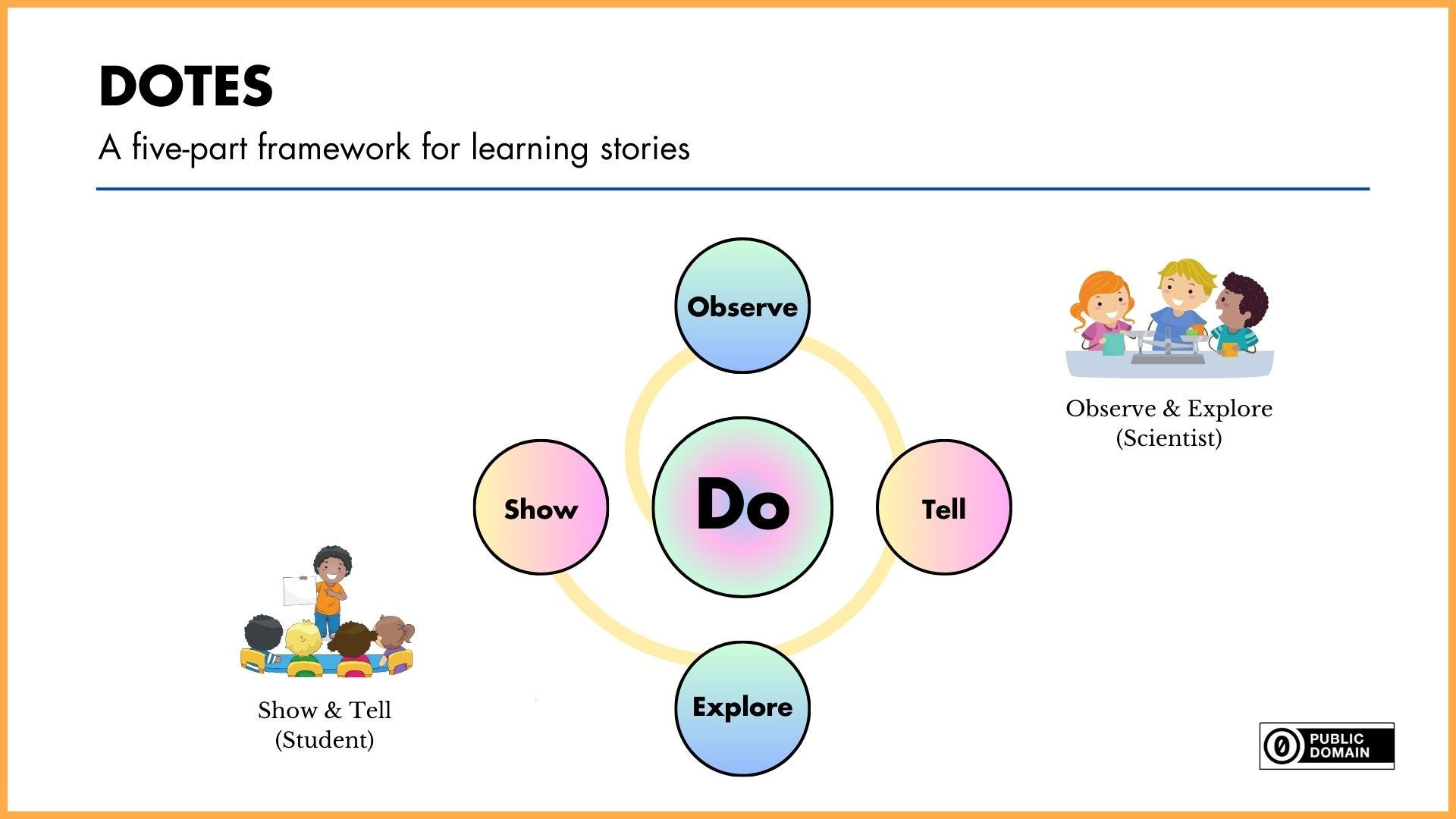
It’s the missing link between reflection and expression. Between messy life experience and polished narrative. Between human story and machine-readable memory.
You might already be using parts of it—if you’ve ever used STAR to prep for an interview, or Kolb’s learning cycle in a training session. But DOTES goes further. It’s not just a method. It’s an ontology—a structured way to think and talk about how learning connects to who we become.
Crafting a dote: From Experience to Expression
So how do you start?
You don’t need a rubric or a scoring guide. You just need a moment of learning—and a little structure to hold it.
Each dote is a single story of growth. Something you did, noticed, reflected on, and shaped into meaning.
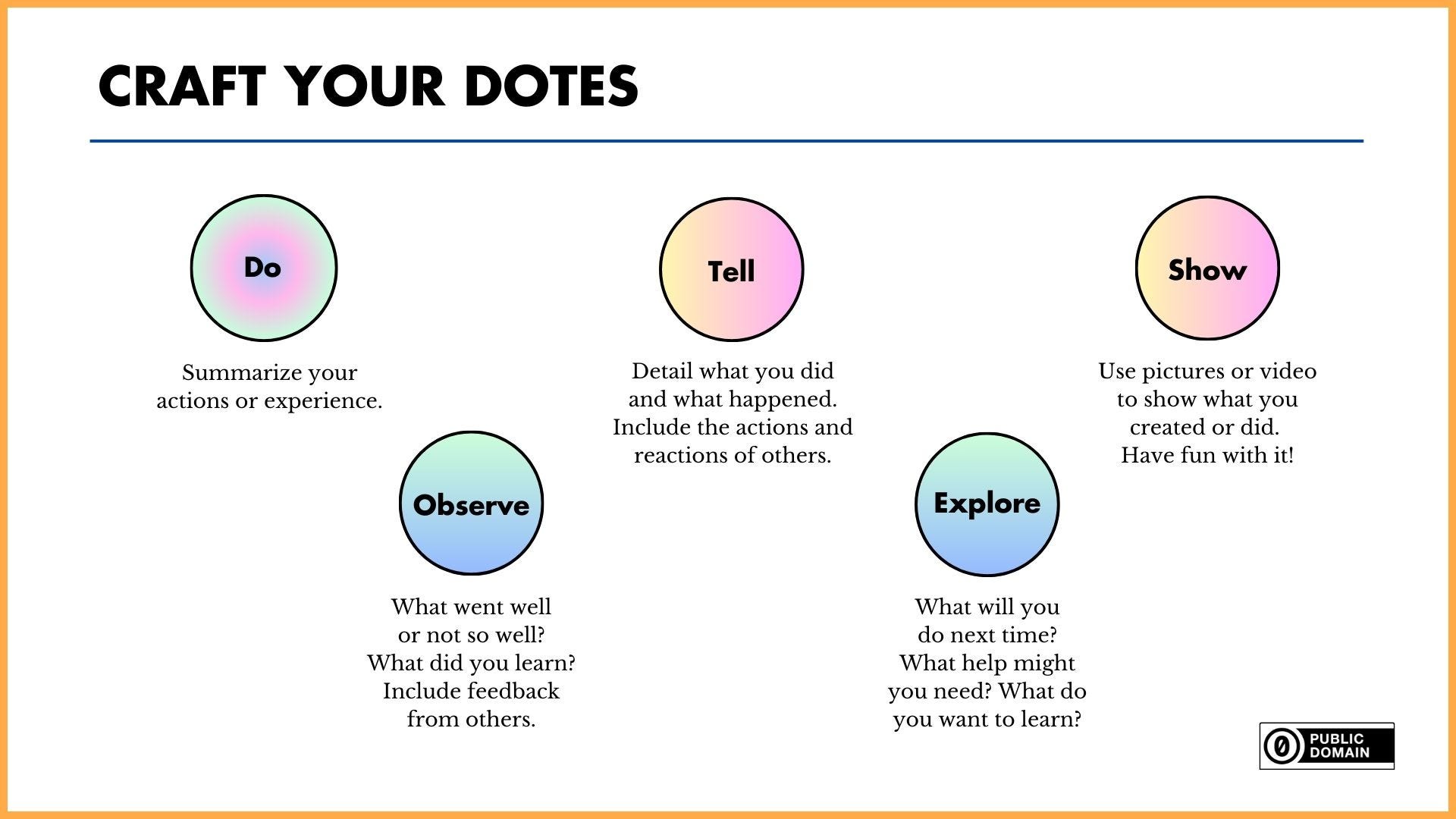
Here’s what each part of a dote invites you to do:
Do – What happened? What did you experience?
Observe – What went well? What didn’t? What did you learn?
Tell – What’s the story you’d tell someone else?
Explore – What would you do differently next time? What questions are still open?
Show – What can you share to make it real—photo, video, quote, drawing, snippet?
These dotes become a trail of breadcrumbs. Not just memories—but meaning. Structured in a way that you (and others) can return to, remix, and build on.
The Deeper Why: Connecting Learning to Life
Here’s the part most systems ignore: Learning doesn’t happen in a vacuum. It’s always connected—to our relationships, to our growth, to our sense of purpose.
Your dotes help make that connection visible.
They don’t just document what happened. They reveal what matters. And over time, they form a map of where you’ve been—and who you’re becoming.
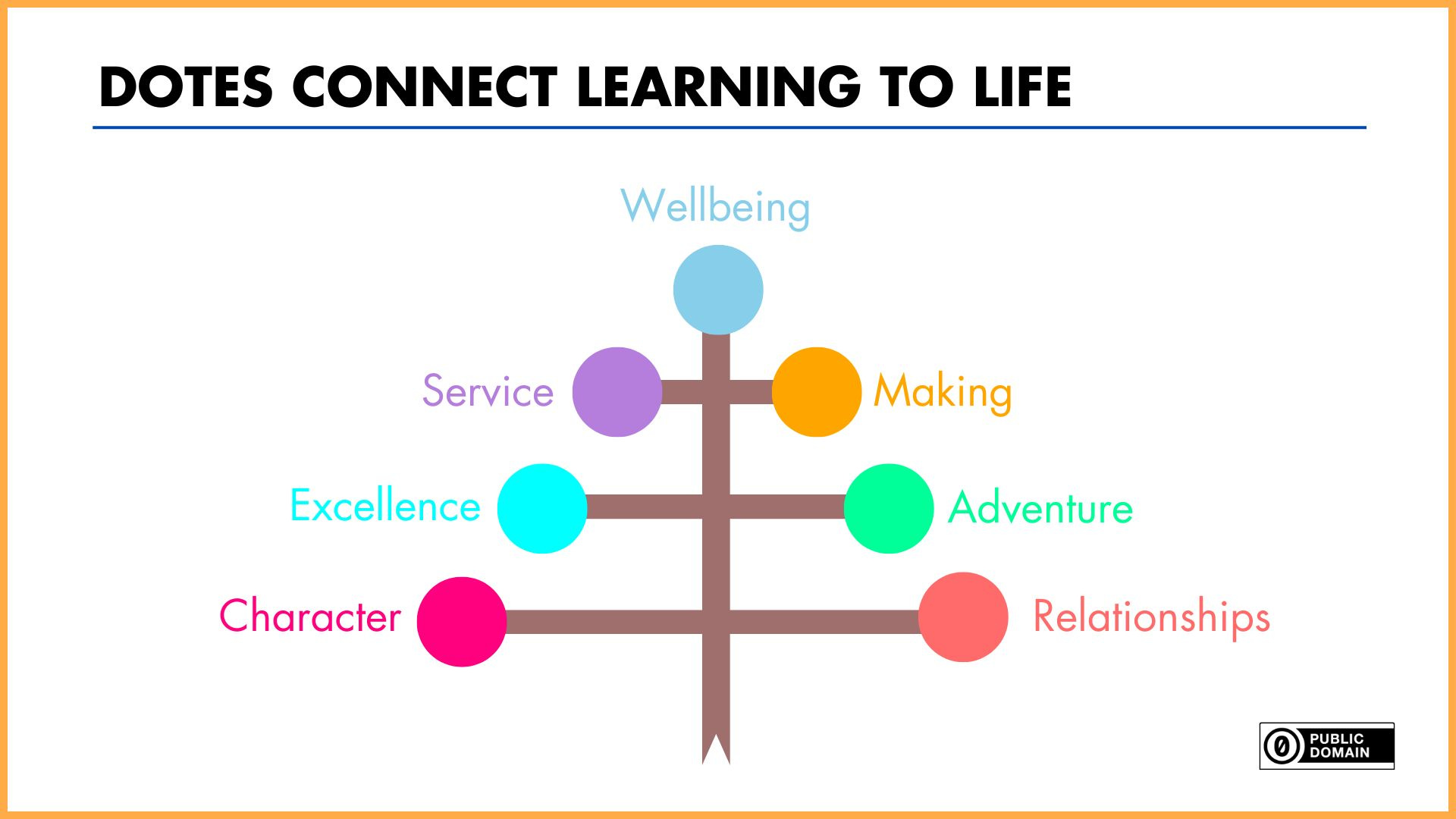
Maybe a dote shows character—sticking with something hard.
Maybe it reflects service—helping someone else.
Maybe it leads to adventure, or making, or a deeper sense of wellbeing.
This isn’t about box-checking. It’s about story-shaping.
Your learning, connected to your life.
Remixing Your Story with AI
Here’s where it gets powerful.
AI is getting better at generating content, but it still struggles with context and meaning. It can write a résumé bullet point, but not if it doesn’t know what happened or why it mattered to you.
Your dotes become the source material. Not just data, but story.
Not just facts, but memory.
Not just what you did—but how you learned and grew.
Want to turn a dote into a college essay? A cover letter? A short video? A social post? You can—because the substance is already there.
AI helps you shape it.
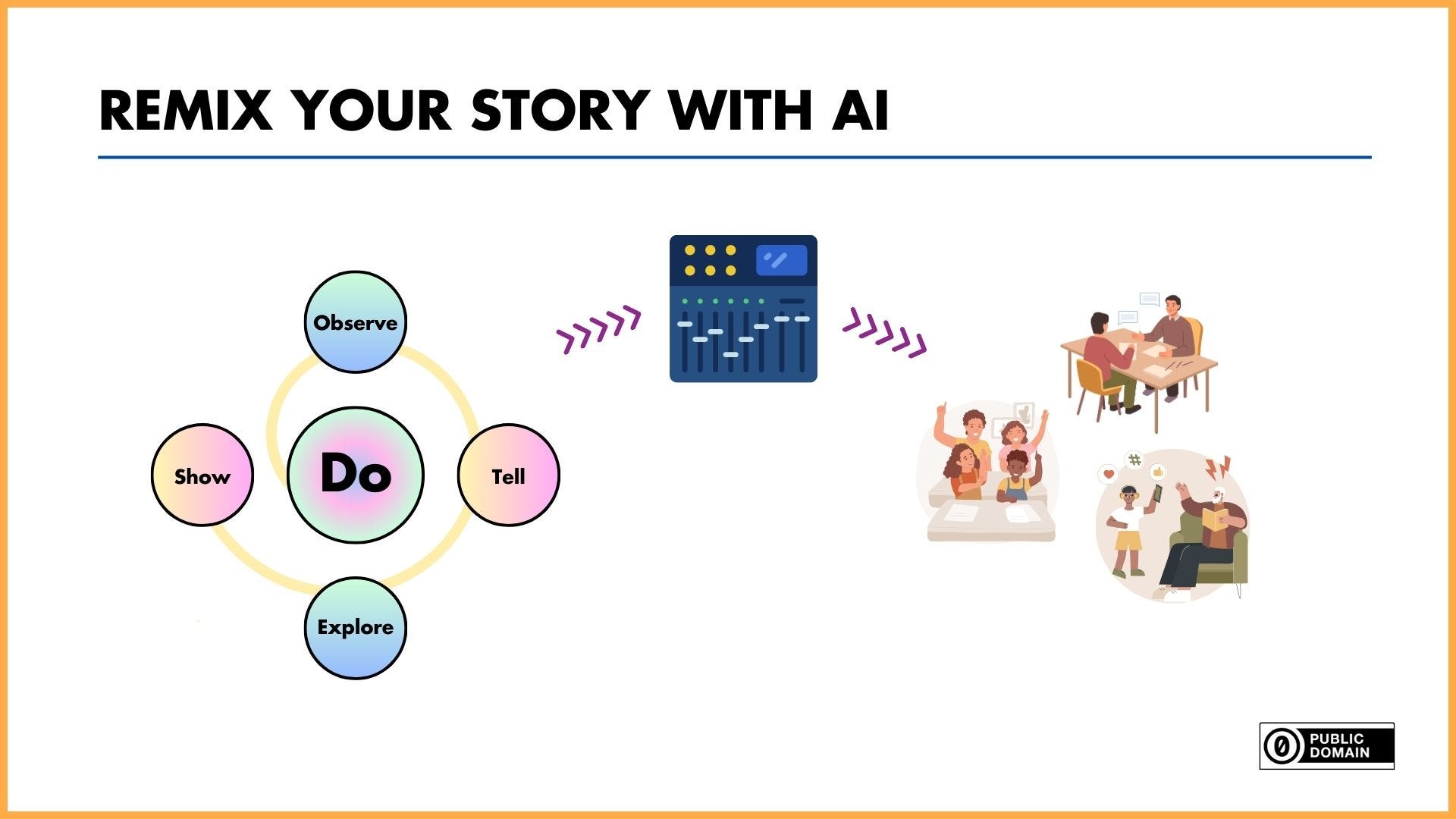
The machine helps with the medium.
But you hold the meaning.
Back to Where We Started
It all goes back to Show & Tell.
That first learning model we practiced in preschool? It still works. It’s still true.
You do something that matters.
You reflect on it.
You tell the story.
You show what you made.
You explore what’s next.
This time, though, it’s not just a classroom exercise. It’s a lifelong skill.
A portable identity.
A story you’re still writing.
So here’s your invitation:
Pick a moment. Any moment. Craft a dote.
And then—Show and tell.